

 Kochi, Kerala · India
Journal / Guide
Lighting a Kerala home: daylight first, fittings second
We get intense light for most of the year and grey skies for three months. A lighting plan that ignores either one will disappoint.
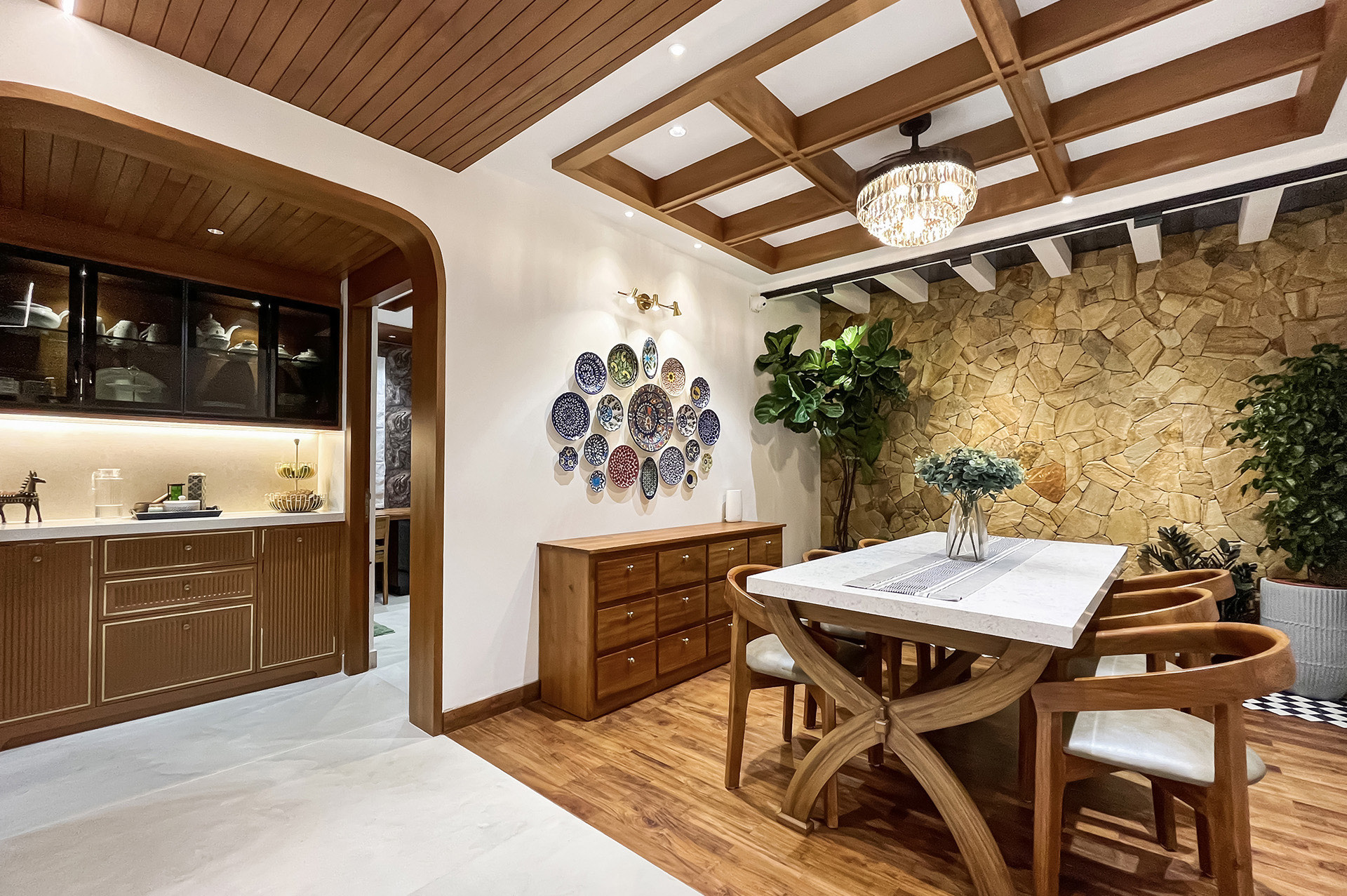
Kerala gives you two quite different lighting problems in the same year. For most of it there is more daylight than you can comfortably use, arriving hot and low from the west. Then for three or four months the sky is a flat grey lid and rooms that felt bright become caves.
A good plan handles both. Most plans handle neither, because they start with choosing fittings.
Daylight is the design; fittings are the backup
Before a single downlight is placed, work out where light enters, at what time, and what you want to do about it.
- North light is the prize: soft, consistent, almost no heat gain. Put the spaces you use in daylight, studies and kitchens especially, on this side wherever the plan allows.
- East light is warm and welcome in the morning and gone by midday. Excellent for bedrooms and breakfast.
- South light is strong and manageable with a horizontal overhang, because the sun is high.
- West light is the difficulty. Low, hot, and at its worst exactly when families come home. Horizontal overhangs barely help; you need vertical shading, a screen, planting or a heavy curtain.
The cheapest cooling in Kerala is shade. A 600mm overhang, a louvred screen or a well-placed tree removes heat before it enters the room. Every rupee spent on shading saves several on air conditioning, and unlike air conditioning it works during a power cut.
Designing for the monsoon
Between June and September the ambient light level indoors can drop below what you need to read comfortably, in the middle of the day. This is why so many Kerala homes have the main light on at noon in August.
Plan for it explicitly:
- Put a switchable daytime circuit in deep rooms, so you can add light without turning on the full evening scheme.
- Favour light wall and ceiling finishes in rooms with a single aspect. Reflected light does real work when the sky is grey.
- Consider a high-level window or clerestory in internal rooms, which brings daylight in without sacrificing privacy or wall space.
- Avoid dark ceilings in low-ceilinged flats. They read as atmospheric in a photograph and oppressive in a wet August.
Layers, not a light in the middle
A single ceiling fixture per room is the default in most Indian homes and it is the reason so many interiors look flat. Three layers is the working minimum.
- Ambient. The general wash. Cove lighting, a few well-placed downlights, or an uplit ceiling. Should be dimmable.
- Task. Where you actually do things: under kitchen wall units, over the counter, beside the bed, at the study. Under-cabinet light in a kitchen is the single highest-value upgrade in most homes, and it is inexpensive.
- Accent. Art, texture, a plant, the good wall. This is what makes a room look designed rather than lit.
A useful discipline: every room should have at least two switchable circuits, so it can be bright when you are cleaning and low when you are not.
Colour temperature
Kerala homes are often lit at 6500K, which is daylight-white and feels clinical after dark. Our preference:
| Space | Suggested |
|---|---|
| Living, dining, bedrooms | 2700–3000K, warm |
| Kitchen work surfaces | 4000K, neutral |
| Bathroom mirror | 4000K, neutral, lit from both sides |
| Study or work desk | 4000K |
| Outdoor and balcony | 2700K, and keep it dim |
Whatever you choose, be consistent within a sightline. Mixed colour temperatures visible at the same time is the most common lighting error we are asked to fix, and it makes an expensive interior look cheap.
Ask for a CRI of 90 or above where colour matters. Low-CRI LEDs make wood look grey and food look unappetising, which is a strange thing to spend money on.
Fittings that survive here
- Bathrooms and balconies need an appropriate IP rating. IP44 as a minimum near water, IP65 anywhere genuinely exposed.
- Coastal Kochi eats cheap metal. Specify anodised aluminium or powder-coated finishes rather than plated mild steel.
- Drivers fail before LEDs do. Put them where they can be reached without dismantling a ceiling, and buy a brand you can still get in five years.
- Sealed fittings in humid rooms collect condensation. Vented ones last longer.
- Fans and lights conflict. A downlight behind a ceiling fan produces a strobe. Coordinate their positions on the same drawing.
If the lighting plan is drawn after the false ceiling is up, it is not a plan. It is an apology.
Frequently asked
Warm 2700 to 3000K in living areas and bedrooms, neutral 4000K at kitchen work surfaces, bathroom mirrors and desks. The important rule is consistency within a single sightline, since mixed temperatures in one view is the most common and most visible lighting mistake.
Horizontal overhangs do little against low western sun. You need vertical shading: louvred screens, jaali, planting, or heavy curtains. Shading outside the glass is far more effective than anything applied inside it.
Ambient daylight drops sharply under a heavy overcast sky, sometimes below comfortable reading levels at midday. Plan a separate switchable daytime circuit for deep rooms, keep wall and ceiling finishes light, and consider clerestory windows in internal spaces.
IP44 as a minimum near water, and IP65 for genuinely exposed positions such as open balconies. Near the coast, also specify anodised aluminium or powder-coated finishes rather than plated mild steel.
Keep reading
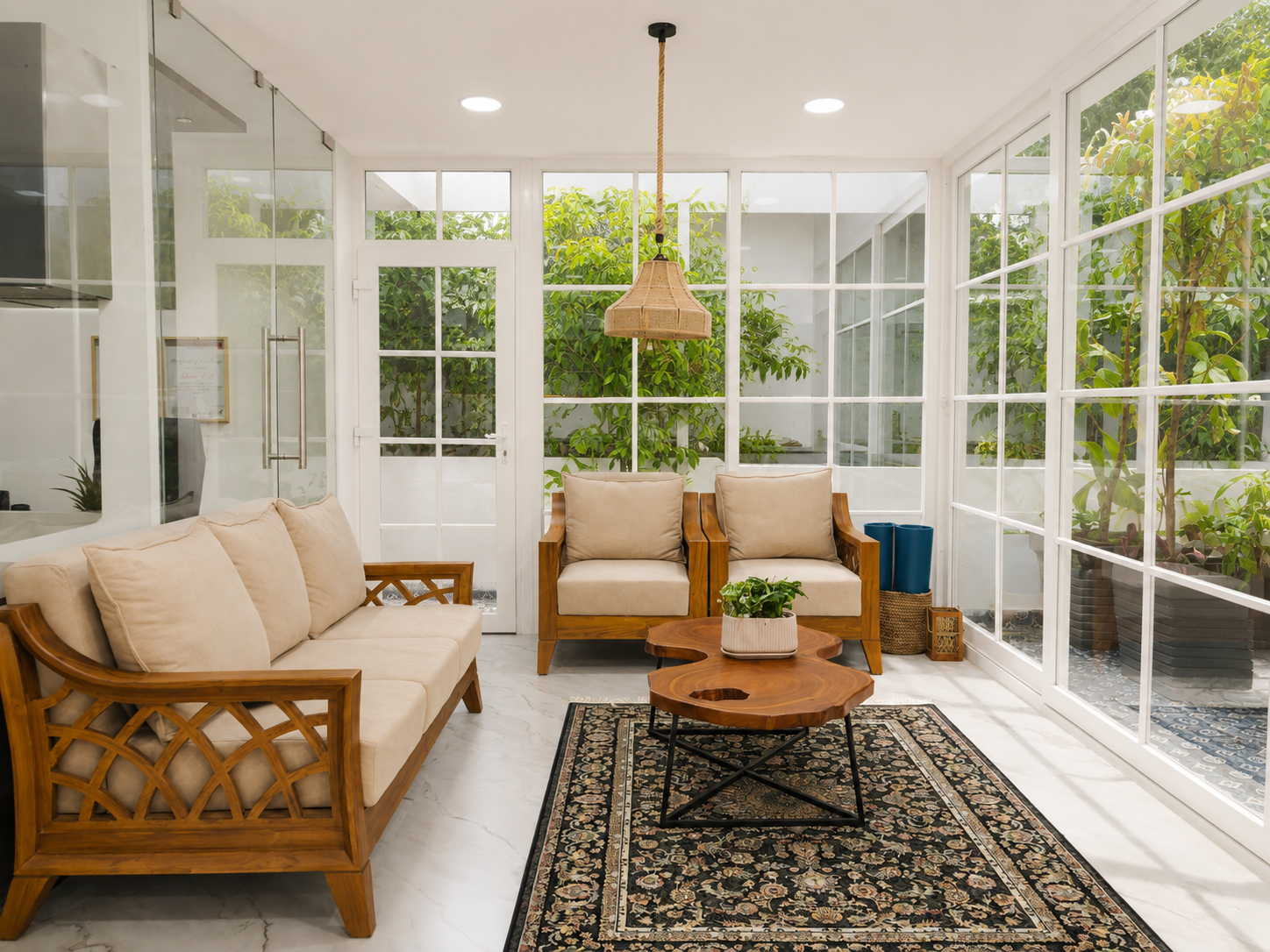
Designing a 2BHK apartment in Kochi
How to get generosity out of a compact Kochi flat: what to remove, where storage really goes, and the three moves that make the biggest difference.
Read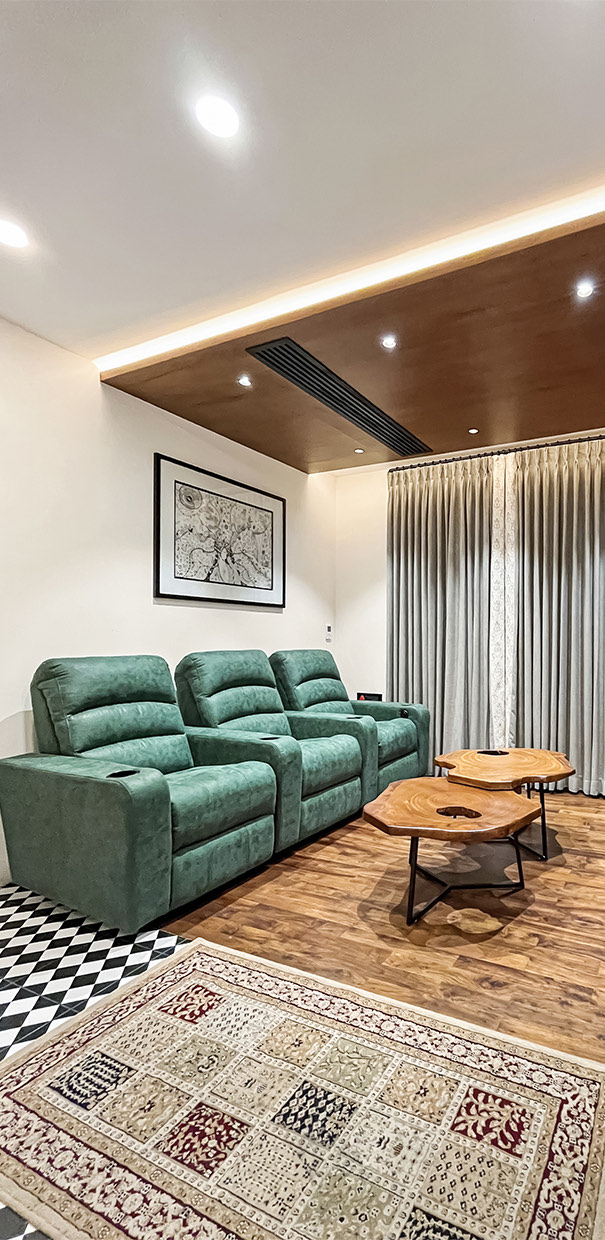
Kerala's traditional elements in a modern home
How to bring Kerala's architectural vocabulary into a contemporary house without producing a theme park.
Read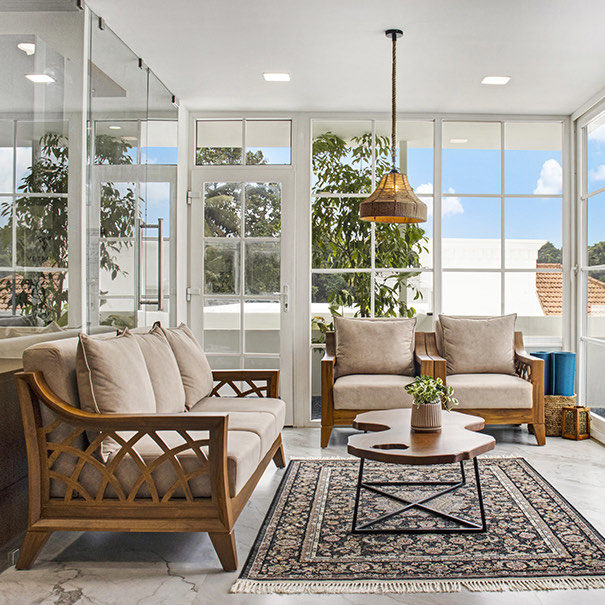
How to choose an interior designer in Kochi
The questions worth asking, the documents worth seeing, and the warning signs that a project is going to go badly before it starts.
Read