

 Kochi, Kerala · India
Journal / Materials
Choosing wood for furniture in a Kerala home
Teak, rubberwood, mahogany, marine ply: what each one is good for, and what the timber merchant will not volunteer.
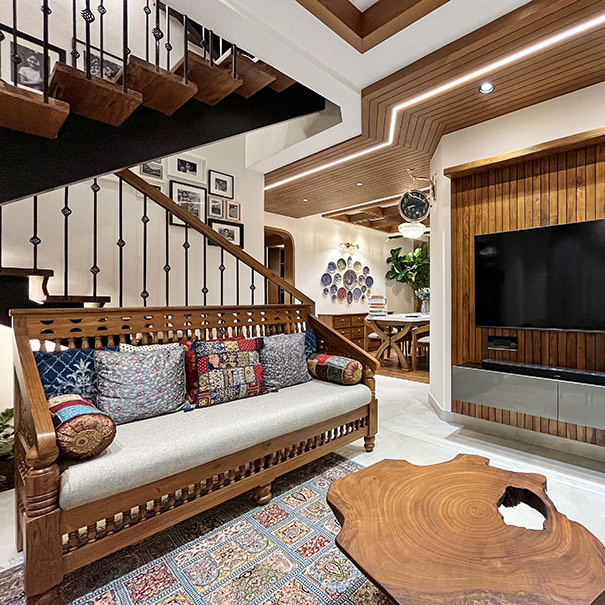
Kerala has a long, genuinely earned relationship with timber. It also has the humidity and the insect population to punish a bad timber decision faster than almost anywhere else in the country. Most of what goes wrong is not the species; it is seasoning, detailing and where the wood was asked to sit.
The species, honestly assessed
Teak
Still the benchmark, and still worth it where you can justify it. Naturally high oil content makes it dimensionally stable and genuinely resistant to termites and rot. It ages into something better than it started as. It is also expensive and increasingly variable in quality.
Worth knowing: not all teak is the same. Old-growth and plantation teak behave differently, and imported teak from Africa or Latin America is often sold simply as "teak" at a price that suggests otherwise. Ask where it came from and how long it has been seasoned. Use it for doors, windows, exposed frames and any furniture you expect to keep.
Rubberwood
Kerala's most sensible everyday hardwood, and a genuinely good sustainability story: it comes from plantation trees at the end of their latex-producing life. It is light in colour, takes stain and polish well, and is affordable.
The catch is that rubberwood has no natural durability at all. Untreated, it is termite food and it will develop fungal staining in our humidity. Properly kiln-dried and pressure-treated, it is a perfectly good interior timber. Ask for the treatment certificate; this is not a formality.
Mahogany
Stable, attractive, workable, widely available in Kerala. Moderate natural durability, better than rubberwood and well below teak. Good for interior furniture and joinery, less good anywhere it can get consistently wet.
Jackwood (anjili)
The quiet local hero. Traditionally used across Kerala for doors, frames and furniture, it is stable, ages to a deep warm tone, and has reasonable natural resistance. Increasingly hard to source in good sizes, which is a shame.
Pine and imported softwoods
Cheap, light, and out of their depth here. Softwoods absorb moisture readily and are attacked easily. Fine for a decorative shelf; not for anything structural or long-lived.
| Timber | Natural durability | Best used for |
|---|---|---|
| Teak | Excellent | Doors, windows, exposed frames, heirloom furniture |
| Jackwood | Good | Doors, frames, traditional furniture |
| Mahogany | Moderate | Interior furniture and joinery |
| Rubberwood | None untreated | Everyday furniture, if kiln-dried and treated |
| Pine | Poor | Light decorative work only |
Seasoning matters more than species
A well-seasoned rubberwood table will outperform a badly seasoned teak one. Timber that goes into a Kerala home carrying too much moisture will shrink, cup and open at the joints within a year, and no finish will save it.
- Kiln-dried is what you want, to roughly ten to twelve percent moisture content for interior use.
- Air-dried can be excellent but takes months and is often cut short.
- Ask for a moisture meter reading on delivery. Any serious supplier will have one. If they will not measure it, that tells you something.
Solid wood moves. Always. It expands across the grain with humidity and contracts when it dries. Good joinery allows for this: floating panels in frames, slotted fixings on tabletops, gaps designed in rather than engineered out. A tabletop screwed rigidly to its frame will split in Kerala, whatever it cost.
When engineered board is the better answer
Solid wood is not automatically superior. For large flat surfaces, engineered boards are more stable, and stability is what you want in a wardrobe shutter or a full-height panel.
- BWR and BWP plywood for carcasses and anything structural.
- Blockboard for long shelves and door shutters where you want less sag.
- MDF for painted or lacquered flat panels, kept away from water.
- Veneer on ply gives you the look of solid timber with none of the movement, at a fraction of the cost.
A well-made home usually uses both: solid timber where it is seen, touched and structural; engineered board where flatness and stability matter more than romance.
Finishing, for this climate
Whatever you use, seal all six faces, including the underside and the back that nobody will ever see. An unsealed face is an open door for moisture, and it is the single most common cause of warping in furniture we are asked to repair. Melamine and PU finishes both work well here. Natural oil finishes look wonderful and need reapplication every year or two in our humidity, which is fine if you enjoy that and a nuisance if you do not.
Frequently asked
For doors, windows, exposed frames and furniture you intend to keep, yes. Its natural oils give real resistance to termites and rot, and it stays dimensionally stable. For internal carcasses and flat panels, engineered board is more stable and far better value.
Yes, provided it is kiln-dried and pressure-treated, and you ask for proof of both. Untreated rubberwood has no natural durability and will be attacked by termites and fungal staining in Kerala's humidity.
Almost always seasoning or detailing rather than species. Timber that arrives with too much moisture will shrink and open at the joints. Rigid fixings that do not allow the wood to move across the grain cause splits. Unsealed back faces let moisture in unevenly.
Roughly ten to twelve percent for interior use. Ask the supplier for a moisture meter reading on delivery.
Keep reading
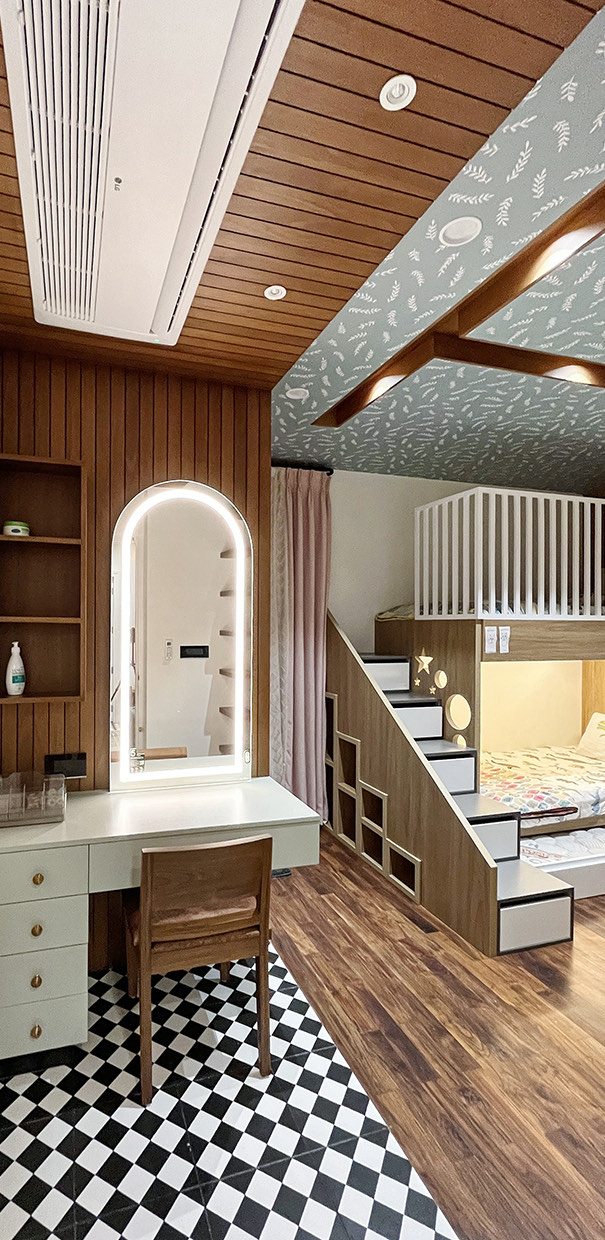
Materials that survive a Kerala monsoon
Boards, finishes, hardware and flooring judged by one test: are they still fine after five monsoons in Kochi?
Read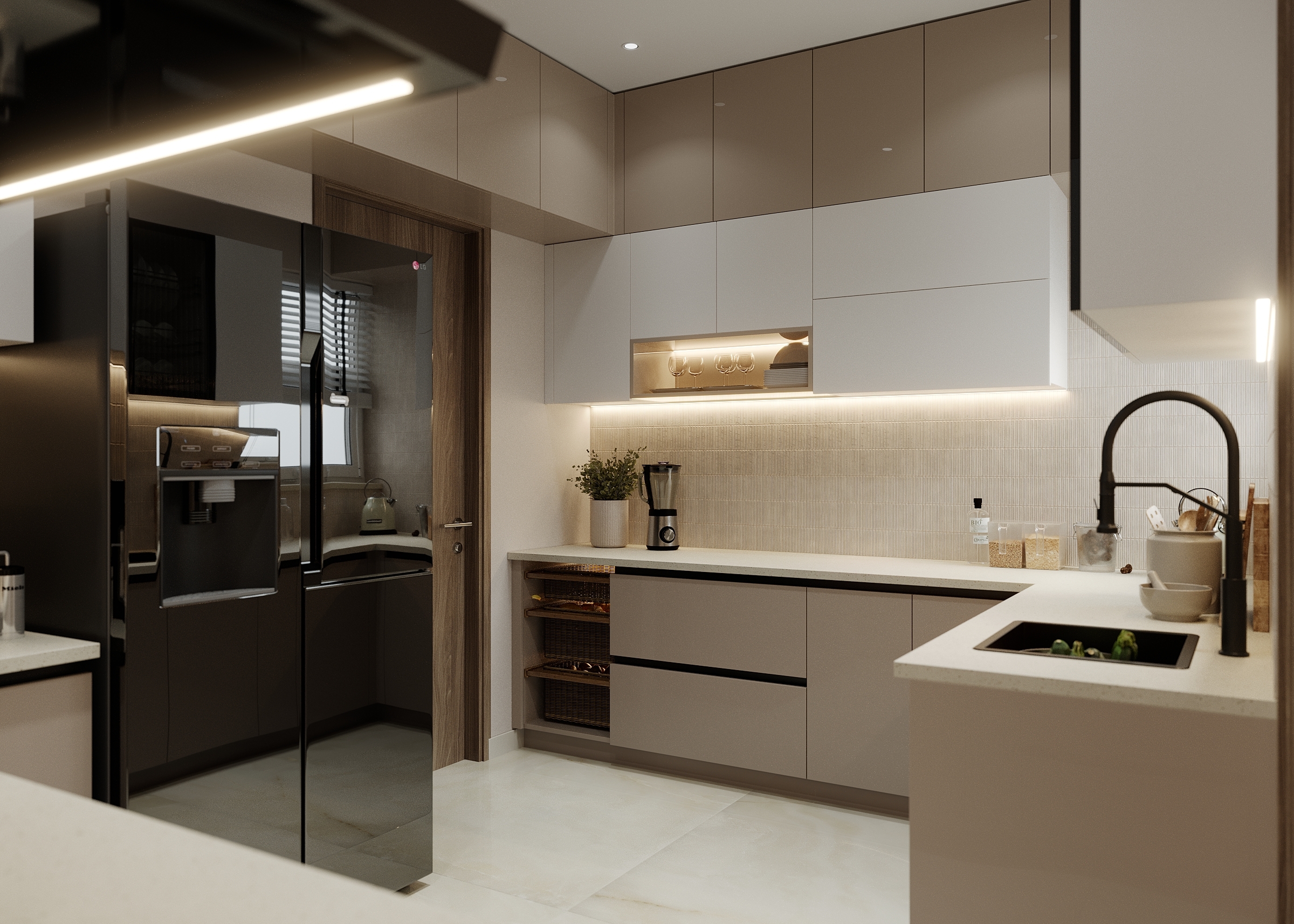
What interior design actually costs in Kochi
Indicative 2026 ranges for apartments and villas in Kochi, what drives the number up or down, and the line items people forget to budget for.
Read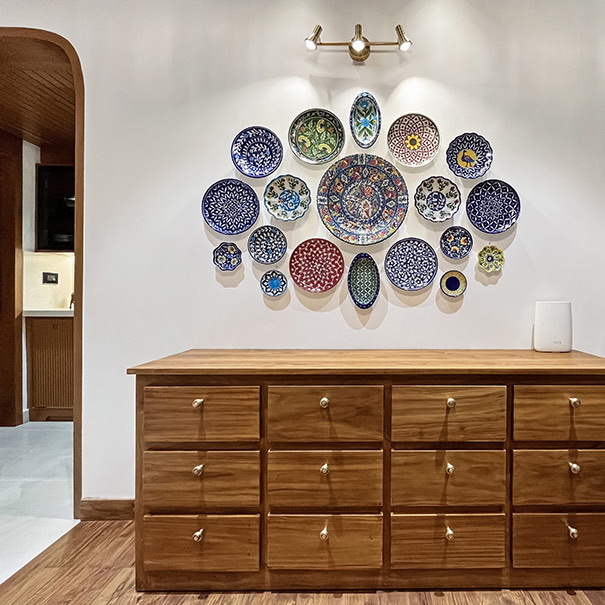
Modular kitchen cost in Kerala, and what you are actually paying for
Layouts, carcass materials, shutter finishes and hardware, priced honestly, with the choices that matter in a Kerala kitchen.
Read